Stump grinding is the usual and cheaper route for dealing with an old tree stump in your garden. A machine chews the solid wood to below ground level and leaves the deep roots to rot, which is enough to clear the way for most new lawns and patios. Full removal is a much bigger job where the stump and root ball are dug out completely, and you typically only need this for building work or where the roots must go to stop a disease.
Stump grinding or full removal
Before you hire a professional, it helps to understand the difference between the living and built parts of your garden. Soft landscaping is the living part, which includes the soil, turf, planting and trees. Hard landscaping is the built part, covering patios, paths, walls, steps, decking, fencing and drainage. An old tree stump sits right on the boundary of the two, taking up valuable space and blocking groundworks.
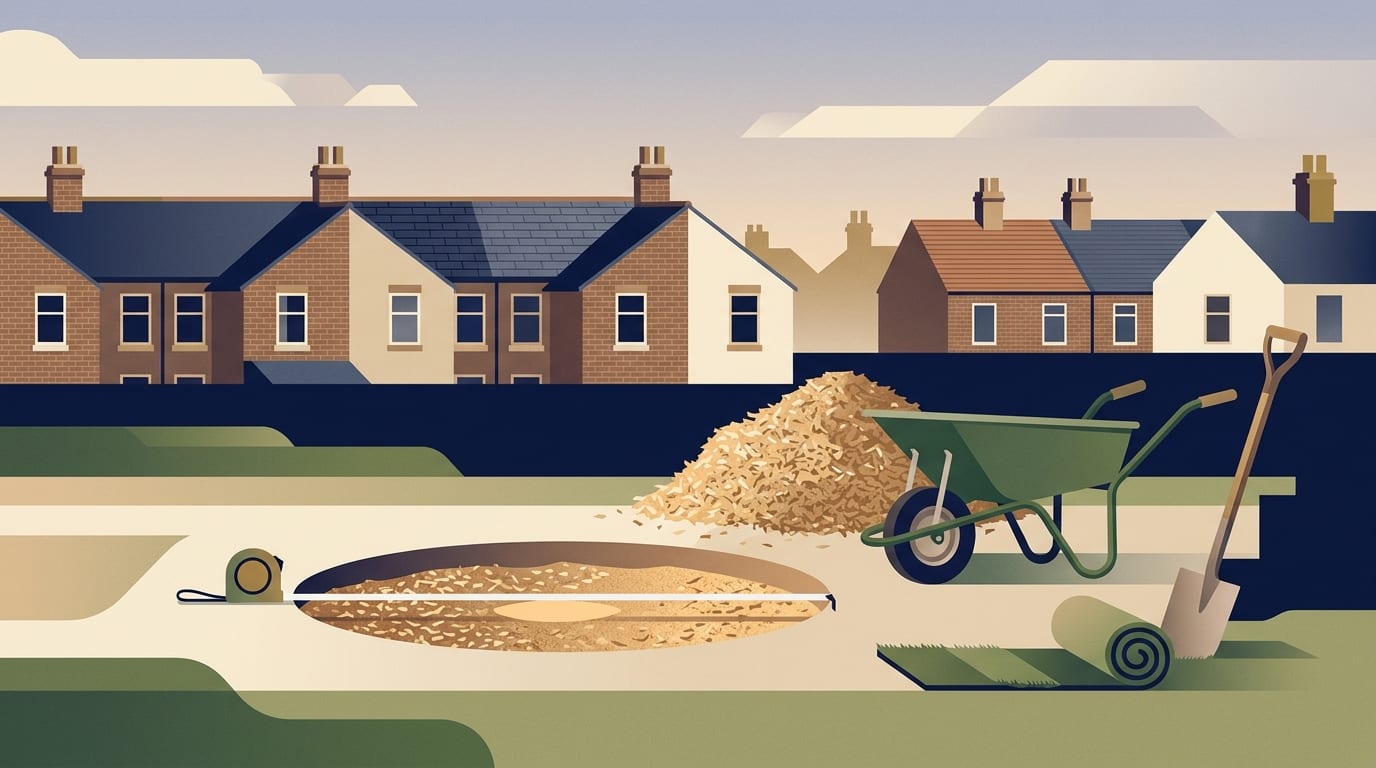
Stump grinding uses a heavy machine with a rotating cutting wheel to chip away the wood. The operator grinds the stump down to roughly 15 to 30cm below ground level. The roots spread out beneath the soil are left in place to decompose naturally over time. This approach causes minimal disruption to the rest of the garden.
Full removal, often called a dig-out, means taking out the stump and the entire root ball. This leaves a much larger hole and requires heavy machinery or extensive manual digging. Because it pulls up the surrounding earth, a dig-out disrupts the garden far more than grinding.
If the tree itself is still standing, you need to have it felled before the stump can be ground. Felling is a completely separate job and you can find those details in the guide on how much tree removal costs. If the tree is in a conservation area or protected by a Tree Preservation Order, the rules are strict. You can check the guide on permission to cut down a tree to see what notice you must give the council.
What stump grinding costs
Landscapers and tree surgeons price stump grinding after a site visit. Typical 2026 prices group stumps into size bands based on the diameter across the cut face at ground level.
The table below shows the typical cost of stump grinding based on the size of the stump.
|
Size band |
Diameter |
Typical price |
|---|---|---|
|
Small |
Under 30cm |
£60 to £120 |
|
Medium |
30 to 60cm |
£100 to £200 |
|
Large |
60cm+ |
£200 to £400+ |
|
Day rate |
Not applicable |
£300 to £600 |
The figures above are typical 2026 prices, and local quotes will differ.
Very large or multi-stemmed stumps cost above £400 and are priced on site. If you have several stumps to clear in one visit, paying a day rate of £300 to £600 a day is usually cheaper than per-stump pricing. If you only have a single small stump, companies often charge a minimum call-out fee of £80 to £150 to cover their travel and setup time.
Another way professionals price the work is by a rule of thumb based on inches. For stumps sitting low to the ground, the removal alone costs £3 to £5 per inch of diameter, with the labour cost added on top.
The table below shows typical prices using this alternative sizing method. These figures were worked out differently from the size bands above, so read them separately.
|
Method |
Stump size |
Typical price |
|---|---|---|
|
Grinding |
Smaller than 5 inches |
£40 to £80 |
|
Grinding |
Bigger than 5 inches |
£80 to £350 |
|
Full removal |
Smaller than 5 inches |
£150 to £200 |
|
Full removal |
Bigger than 5 inches |
£200 to £350 |
These are typical 2026 guide figures, and local quotes will differ depending on the exact size, the method used and the labour added on top. You should always check whether your written quote includes VAT.
What full stump removal costs
Digging out a root ball completely is a major groundwork task. Typical 2026 prices for a full dig-out range from £250 to £800+ per stump. This price covers the extraction, but you also have to pay for spoil disposal and the backfill soil needed to fill the large hole left behind.
In the per-inch pricing, removal of a single stump smaller than 5 inches costs £150 to £200. A stump bigger than 5 inches costs £200 to £350. The exact price depends heavily on how deep the roots go and what machinery is needed to pull them out.
You typically only need a full dig-out if the site is being built on with deep foundations, or if the roots must be fully removed to stop a disease spreading. For almost all standard landscaping projects, grinding is the better option.
What changes the price
The diameter of the stump is the most important factor in the price, but it is not the only one. When a professional visits your garden to quote for the work, they will look at the number of stumps and the hardness of the tree species. A harder species can push the price up.
Access is a major cost driver for any landscaping work. Grinding machines are heavy, bulky pieces of equipment. Access width for the grinder affects the price. Everything carried through the house costs more, as the workers have to protect your floors and move slowly.
The location of the stump matters just as much. Planning the work around roots, pipes, cables and structures takes extra time. If the stump is in close proximity to walls, fences and buried services, the operator has to work carefully to avoid causing serious damage.
Prices are also influenced by where you live. Tradespeople in London and the South East cost more than in the rest of the UK. Finally, what you plan to do with the area afterwards dictates the required depth, which changes how long the machine needs to run.
How deep the stump should be ground
You must tell the landscaper your plans for the space before they quote, because the future use dictates how deep the machine needs to go. Getting this depth right is crucial for the success of your garden project.
If you are simply laying a lawn over the old stump, shallow grinding is normally sufficient. The Royal Horticultural Society (RHS) says shallow grinding to 20 to 25cm below ground level is usually enough to lay turf over.
If you plan to put new plants in the same spot, or if you are planning hard landscaping like a new patio, the grinder must go further down. The RHS advises that deeper grinding to at least 30cm is needed for replanting or landscaping. New shrubs and trees need space for their root balls to establish.
For hard landscaping, ask the landscaper whether the grinding depth leaves room for a proper sub-base. The sub-base is the compacted crushed stone, often called MOT Type 1, that sits under paving and artificial grass. The groundwork nobody sees is where corners get cut, so a good quote states the depths.
What happens to the chippings
A stump grinder turns the solid wood into a large pile of mixed wood chippings and soil, known in the trade as arisings. What happens to these arisings changes the price of the job.
Leaving the grindings to backfill the hole is normally included in the headline price. This is the cheapest option and requires the least amount of labour, but it is not always the best choice for the soil.
If you want the area completely clear, you have to pay for the waste to be taken away. Removing the grindings and backfilling the hole with fresh topsoil costs an extra £40 to £150+ per stump. A trader who carries waste away from your property must be a registered waste carrier, and the register is public so you can check their details online.
Replanting or laying turf afterwards
If you decide to keep the chippings to save money, you need to manage them carefully. The RHS warns that you should avoid filling the hole with sawdust.
Woody material like sawdust can tie up nitrogen in the earth as it breaks down. Nitrogen is essential for green, leafy growth. This process causes a nutrient deficiency in any new plants grown in that spot, and the nitrogen lock-up can last for up to two years. New plants in that spot may struggle to establish.
Instead of pushing the sawdust back into the hole, you can recycle it elsewhere in the garden. The RHS suggests adding small amounts of grindings to a compost bin, layered with green waste. If you have larger quantities, you can spread them as a thin mulch on well-established beds.
Stump killers and honey fungus
Some homeowners look for chemical solutions to avoid the cost of hiring machinery. Stump killers are available to buy, but they are strong weedkillers with big environmental impacts. The RHS does not support their use in gardens.
Disease changes the advice. Honey fungus is a soil-borne disease. If you have lost several plants to a soil-borne disease such as honey fungus, the RHS advises removing the tree, the stump and the large roots. Grinding leaves the roots in place, so in this situation ask a trained professional about removing them.
Do not attempt to pull out diseased stumps or operate heavy machinery yourself. Winches, mini-excavators and stump grinders are potentially hazardous pieces of equipment. If you are in any doubt, hire a trained professional to do the work safely.
Preparing the ground for hard landscaping
If you are removing the stump to build a patio, the ground underneath needs to be perfectly prepared. A good written quote states the excavation depth, the sub-base depth, named materials, drainage and waste removal.
You need to think about falls before the paving goes down. A fall is the slight slope that sheds water off a surface and away from your house. If an old stump forces the patio to be laid flat, there may be no fall, so water can pool or run towards the house.
If you are building a deck over the old stump area, you need space for the frame beneath the boards. You can choose between softwood, hardwood and composite boards, but all of them need a solid, level frame. A stump left too high will ruin the levels of the frame.
Watch out for doorstep callers offering cheap paving or leftover materials. These cowboy pavers often demand cash deals with no written specification. Insist on a written specification that states the depths and the materials.
Planning rules and permissions
Once the stump is gone, you might be planning new features. You need to know the basic planning rules for England, per the Planning Portal. Elsewhere, or if unsure, you should check with your council.
Decking is permitted development if it is no more than 30cm above the ground and, with extensions and outbuildings, covers no more than 50 per cent of the garden. Fences and walls can be up to 1 metre high next to a road or its footpath and 2 metres elsewhere.
If you are clearing a front garden stump for a new driveway or patio, the surface matters. Paving more than 5 square metres of a front garden with an impermeable surface that does not drain to a permeable area needs planning permission. Permeable surfacing does not. These rights apply to houses, not flats or maisonettes. Listed buildings need consent for significant work.
A Tree Preservation Order makes it an offence to cut down, lop, uproot or damage a protected tree without the council's consent. Work on trees in a conservation area normally needs six weeks' notice to the council. Always check these rules before a saw or grinder touches the wood.
Questions to ask before you book
Landscaping is not a licensed trade, so vetted membership and evidence of past work matter. A garden designer produces the plan, a landscaper or landscape contractor builds it, and a gardener maintains it. Make sure you are hiring the right professional for the job.
The British Association of Landscape Industries (BALI) says its Accredited members are vetted on workmanship, skill and health and safety. The Association of Professional Landscapers (APL) says members are assessed, regularly inspected and TrustMark accredited. TrustMark is the government-endorsed quality scheme. The Society of Garden and Landscape Designers (SGLD) is the professional body for designers. Membership is a good sign, not a guarantee.
When comparing quotes, ask these questions:
- Is this a fixed quote or an estimate? A quote is a fixed price, an estimate a rough guess.
- Does the price include VAT?
- Will the stump be ground down to at least 30cm for landscaping, or 20 to 25cm for turf?
- Are the arisings left to backfill the hole, or removed entirely?
- If the waste is removed, is the cost of fresh topsoil included?
- Are you a registered waste carrier?
Under the Consumer Rights Act 2015, work must be done with reasonable care and skill. If not, you can ask for it to be put right or seek a partial or full refund. Citizens Advice suggests getting three written quotes, having a written contract, paying deposits of no more than 25 per cent and paying by card. They also say you might be able to cancel within 14 days of agreeing a contract. If you have a dispute, contact Citizens Advice for guidance.
Common questions
Can I leave a tree stump in the ground?
Yes, you can leave a stump in the ground, and the roots left by grinding are left to decompose. An old stump can get in the way of a new patio, lawn or fence line. If you have lost several plants to a soil-borne disease such as honey fungus, the RHS advises removing the tree, stump and large roots.
Do I need planning permission to remove a stump?
A Tree Preservation Order makes it an offence to cut down, lop, uproot or damage a protected tree without the council's consent, and work on trees in a conservation area normally needs six weeks' notice to the council. Ask the council before any work on a protected tree or a tree in a conservation area.
What is the cheapest way to deal with a stump?
Stump grinding is cheaper than a full dig-out, especially if you leave the wood chippings to backfill the hole instead of paying for waste removal and fresh topsoil. If you have several stumps in the garden, asking the landscaper for a day rate is usually cheaper than pricing them individually.
Can I lay a patio straight over a ground-down stump?
You need to make sure the stump is ground down deep enough to allow for a proper sub-base. The sub-base is the compacted crushed stone that sits under the paving to keep it stable. If the grinding is too shallow, there may not be room for a proper sub-base.
Next steps
Before you hire a landscaper or tree surgeon, make sure you know exactly what you want to do with the space once the stump is gone.
- Decide if you are laying turf, planting a border, or building a patio, as this sets the grinding depth.
- Check if the tree is in a conservation area or protected by a Tree Preservation Order.
- Get three written quotes that state the exact depth of the grinding and what happens to the waste.
- Ask for evidence of past work and check for vetted membership of BALI or the APL.
Dealing with the stump properly clears the way for the work you have planned. When you are ready to get the job done and need a fixed written quote, you can find a landscaper near you to assess the site and price the work.
Find a top rated landscaper near you
4,373 landscapers across the UK, each ranked on their Google rating and the number of reviews behind it. Start with your county: