A typical concrete shed base costs between £400 and £900 supplied and laid, or £80 to £140 per square metre. A paving slab base for an average shed ranges from £300 to £600. The base decides how long your garden building lasts because a shed built on unlevelled soil can end up out of square within a couple of winters. A level, solid base keeps the structure sound and the shed level.
Why the base matters more than the shed
You should always check the ground is level enough before buying a shed or garden building. A shed on unlevelled soil takes the shape of the ground beneath it. The frame can then end up out of square.
A level concrete slab lasts much longer than bare soil and provides a permanent, flat platform. Laying a shed base is a core part of hard landscaping, which is the built part of a garden including patios, paths, walls and decking. It is entirely separate from soft landscaping, which involves the living parts of the garden such as soil, turf and planting.
If you are planning a complete garden overhaul, you will find that a garden designer produces the plan, a landscaper or landscape contractor builds it, and a gardener maintains it. Checking a garden landscaping cost guide can help you understand how a new shed base fits into a larger project budget.
Shed base types and typical costs
Different garden buildings require different foundations. Concrete bases provide a continuous surface and suit heavier structures. Paving slab bases use similar materials to those covered in a new patio cost guide, but the finish does not need to be decorative. Plastic grids are lightweight, interlocking panels filled with gravel that provide good drainage for smaller sheds. A timber bearer frame creates a raised wooden platform to lift the shed away from the ground.
The table below shows typical costs for different types of shed base, supplied and laid.
|
Base type |
Typical cost for average shed |
Cost per square metre |
|---|---|---|
|
Concrete |
£400 to £900 |
£80 to £140 |
|
Paving slab |
£300 to £600 |
£60 to £100 |
|
Plastic grid fitted |
£150 to £350 |
£30 to £55 |
|
Timber bearer frame |
£200 to £450 |
Not applicable |
|
Gravel or MOT Type 1 |
£120 to £300 |
£25 to £45 |
|
Large reinforced base |
£700 to £1,500+ |
Not applicable |
These are typical 2026 prices and local quotes will differ based on the exact condition of your garden. Check whether VAT is included.
Concrete, timber and plastic grid prices
These 2026 figures were priced separately from the table above and from each other, so do not combine them. Some put a concrete base covering the dig, sub-base and slab costs £500 to £1,500 overall, or about £100 per square metre. Others put pouring concrete for a 2m by 3m base (6 square metres) costs £500 to £600, while laying concrete slabs for the same size costs £470 to £560.
For a 3m by 4m base (12 square metres), pouring concrete costs £850 to £1,000, and concrete slabs cost £800 to £930. A larger 4m by 5m base (20 square metres) costs £1,350 to £1,550 for poured concrete and £1,250 to £1,450 for concrete slabs.
For smaller structures, a timber or plastic grid base is priced at £50 to £500 and is fine for sheds up to about eight by six feet. Concrete pavers cost £100 to £200. These are quick to put down but they can settle or crack under heavy loads. Solid concrete blocks cost around £100, but these can sink over time and are unsuitable for steep slopes. A timber frame and gravel pad costs £200 to £400. This is easy to level on flat ground but comes with a high rot risk because the wood sits in damp gravel.
Groundwork, levels and the sub-base
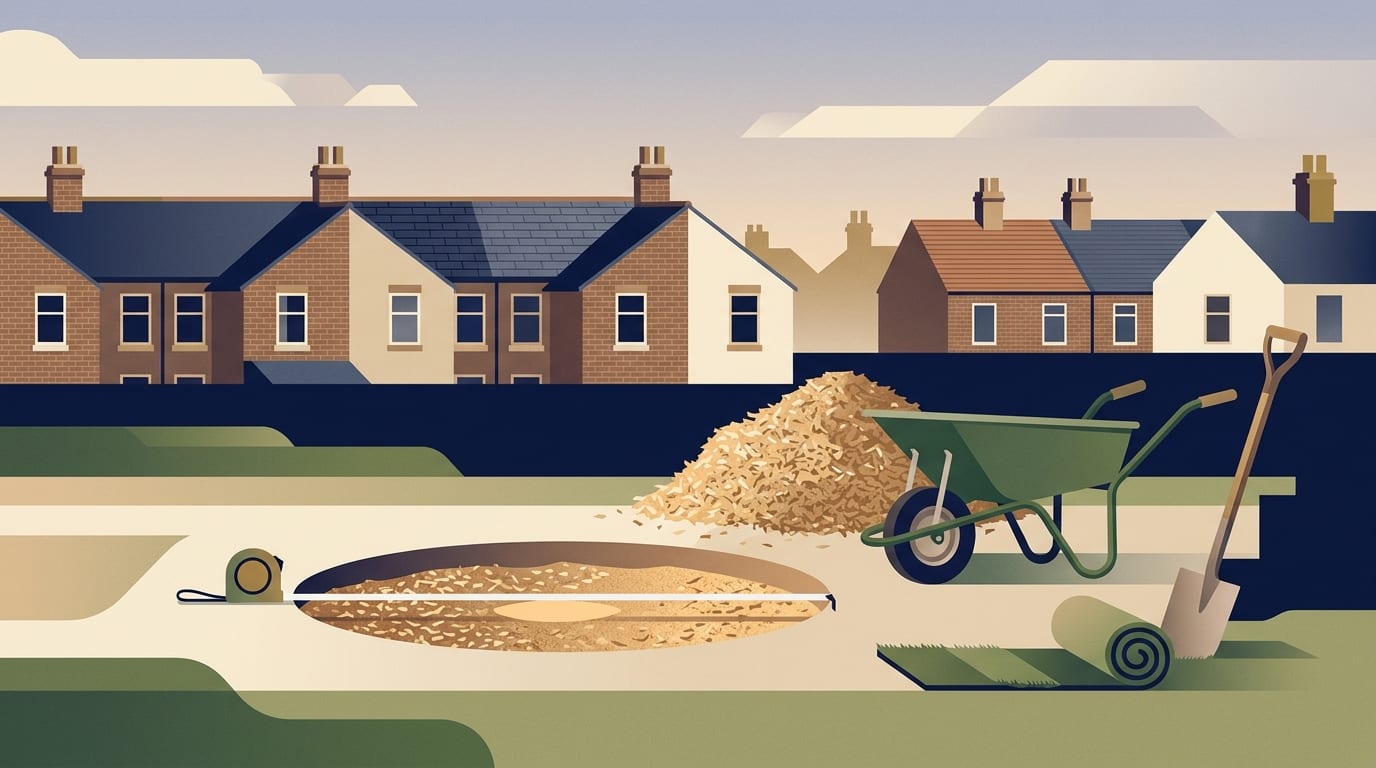
The groundwork nobody sees is where corners get cut by poor tradespeople. A solid base relies on the sub-base beneath it. A sub-base is compacted crushed stone, often called MOT Type 1, which sits under paving and artificial grass to carry the weight. A standard concrete base needs about 100mm of MOT Type 1 sub-base with a concrete slab around 100mm thick. Log cabins and heavier buildings need a 100 to 150mm slab with steel mesh on a well-compacted sub-base.
A good landscaping quote will detail the following groundwork stages.
- Marking out the area and levelling the ground to include falls, which is the slight slope that sheds water away from the timber.
- Excavation and spoil removal to clear the site entirely.
- Compacting the sub-base in layers.
- Fitting shuttering, which uses wooden boards to hold wet concrete in shape, and a damp-proof membrane, which is a plastic sheet that stops moisture rising from the soil.
- Pouring the concrete slab, laying the paving or filling the plastic grids.
Spoil removal is often forgotten in quotes. Make sure excavation and spoil removal are written into the quote, so there is no unexpected cost. Ask who arranges the skip and whether the price covers taking the spoil away, because these items are often forgotten in quotes, and check that any trader who carries the waste is a registered waste carrier.
What pushes the price up and how long it takes
Landscapers price per project after a site visit, and several site factors will push your quote toward the higher end of the typical ranges. Sloping ground raises the price. Soft or clay ground needs a deeper dig and a thicker sub-base to remain stable. Poor access, where materials must be barrowed, also raises the price, with extra access costs of £100 to £300 in other 2026 figures. Prices may be higher in London and the South East.
Removing an old base adds £150 to £400 plus skip hire, and other 2026 figures put removing an old shed at £100 to £250. A long distance between the concrete mixer and the base also raises the price.
Most small shed bases take one day for one or two people to complete. Summerhouses, sloping sites and log cabins may need one and a half to two days. Preparation and laying take about 24 to 36 hours in total, and the slab then needs time to set before it can take any weight. Once mixed, concrete must be placed and levelled within about 1.5 hours before it starts to set. You must allow at least 48 hours before stepping on the slab, and the concrete reaches its full strength after 28 days.
Planning rules and consumer protections
In England, guidance from the Planning Portal sets conditions under which outbuildings can be permitted development, meaning no planning application is needed. The main conditions are listed here, and the council can say whether they apply to your plot.
- Outbuildings must be single-storey with a maximum eaves height of 2.5 metres.
- No outbuilding can be built on land forward of a wall forming the principal elevation of the house.
- No more than half the area of land around the original house can be covered by additions or other buildings.
- The maximum height is 2.5 metres for a building within two metres of the boundary.
- Any outbuilding within the curtilage of a listed building requires planning permission.
These rights apply to houses, not flats or maisonettes. Permeable surfaces that let water drain through do not need permission, but paving more than 5 square metres of a front garden with an impermeable surface that does not drain to a permeable area does need planning permission. Policy in Wales may differ. If you are unsure, you should check with your local council before starting work.
Landscaping is not a licensed trade, so you must rely on consumer law and trade body vetting. Under the Consumer Rights Act 2015, work must be done with reasonable care and skill. If it is not, the customer can ask for it to be put right or seek a partial or full refund. A quote is a fixed price, while an estimate is a rough guess. A trader who carries waste must be a registered waste carrier, and this register is public.
Membership of a trade body is a good sign, though not a guarantee. The British Association of Landscape Industries (BALI) says its Accredited members are vetted on workmanship, skill and health and safety. The Association of Professional Landscapers (APL) says members are assessed, regularly inspected and TrustMark accredited. TrustMark is the government-endorsed quality scheme.
Common questions
Do I need a concrete base for a small shed?
A concrete base is not strictly necessary for a small, lightweight garden shed. Timber or plastic grid bases are priced at £50 to £500 in some 2026 figures and are fine for sheds up to about eight by six feet. However, the ground beneath them must still be solid and level.
Can I put a shed directly on soil?
You should never place a shed directly on unlevelled soil. A shed built on bare, uneven ground can end up out of square within a couple of winters, which a level base helps to avoid. A level base keeps the structure sound and lifts the timber away from damp earth.
Is a paving slab base cheaper than concrete?
Typical 2026 prices put a paving slab base for an average shed at £300 to £600, while a concrete base costs £400 to £900, so paving slabs tend to cost less. The ranges overlap, so compare written quotes. A paving slab base still needs a properly compacted sub-base.
What is the best base for a log cabin?
Log cabins and heavy garden buildings typically need a large, reinforced concrete base. Ask the landscaper to state the slab thickness, the steel mesh and the sub-base depth in the written quote. This involves a 100 to 150mm concrete slab reinforced with steel mesh, sitting on a well-compacted sub-base. This heavy-duty option typically costs between £700 and £1,500 or more, depending on the ground conditions.
Your next steps
Finding a reliable landscaper means asking the right questions and getting everything in writing before any soil is moved. Citizens Advice suggests getting three written quotes, a written contract, paying deposits of no more than 25 per cent and paying by card. You might also be able to cancel within 14 days of agreeing a contract. If disputes arise, Citizens Advice is the best place to start.
- Check the ground in your garden is level enough before buying your shed or garden building.
- Ask your landscaper to confirm the exact excavation depth and sub-base depth in their written quote.
- Ensure the quote explicitly includes spoil removal and the cost of skip hire.
- Check whether VAT is included in the final price you are given.
- Look for vetted membership of a recognised trade body like BALI or the APL to check their workmanship and skill.
Once you know exactly what size base you need and what the groundwork should involve, you can find a landscaper near you to provide a detailed, fixed-price quote.
Find a top rated landscaper near you
4,373 landscapers across the UK, each ranked on their Google rating and the number of reviews behind it. Start with your county: