Weed membrane reduces weed growth but does not stop it completely. It is most effective under decorative gravel or bark in beds, and least useful under paths and drives that are walked or driven on. If you have a quote for a new gravel path or border, checking the type of membrane and where it will go is a good way to see if it is worth paying for.
What weed membrane actually does
A weed membrane works primarily by blocking light from reaching the earth beneath it. When light cannot reach the soil below, the weed seeds already in the ground cannot germinate. Perennial weeds already in the soil need covering for at least a few growing seasons to suppress them properly.
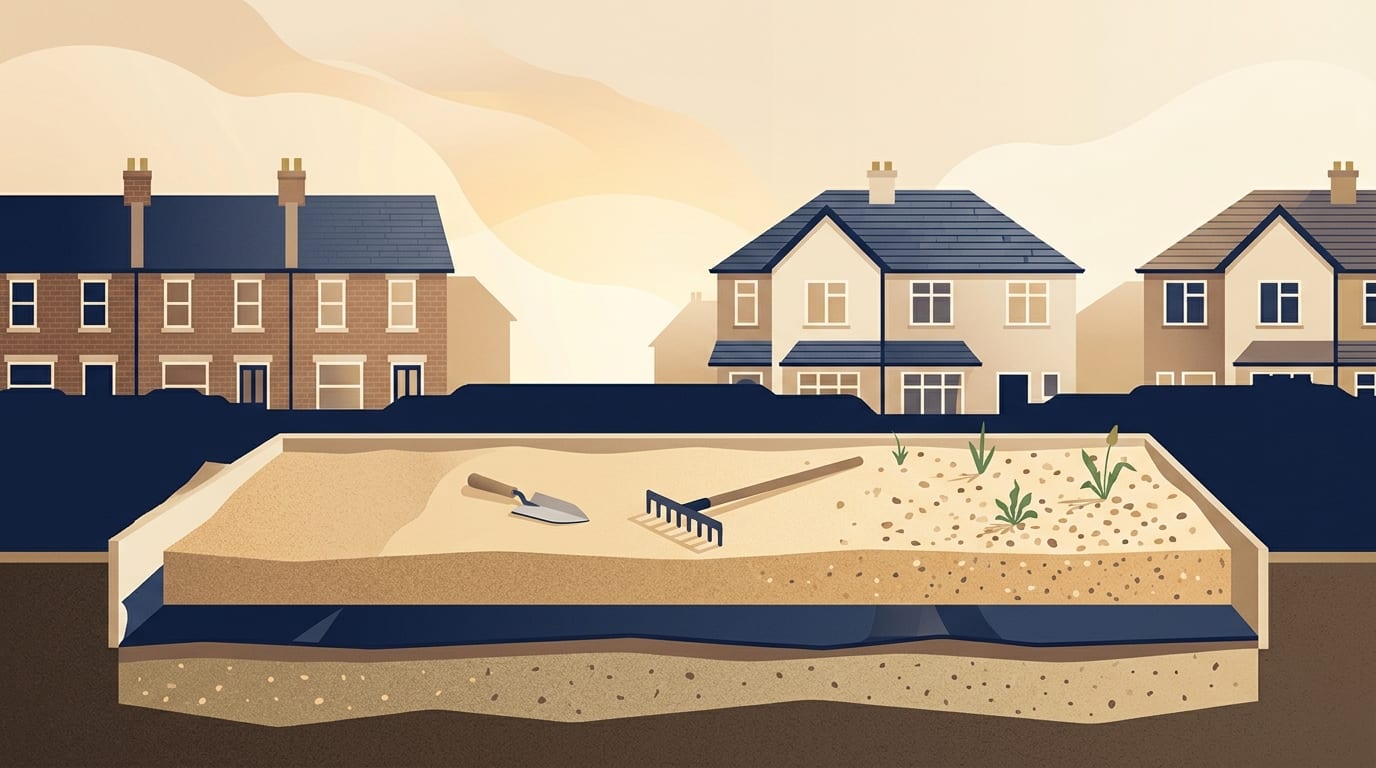
The other main job of a landscape fabric is separation. It sits directly between the sub-grade, which is the ground beneath, and your chosen surface dressing. This stops your decorative gravel or bark from mixing into the soil over time.
Landscaping is split into two main areas. Hard landscaping is the built part of a garden, which includes patios, paths, walls, steps, decking, fencing and drainage. These areas can have impermeable surfaces that shed water, or permeable surfaces that allow water to soak through into the ground. Soft landscaping is the living part, which covers soil, turf, planting and trees.
Annual weed seedlings are easily smothered by temporary weed fabrics or a thick layer of mulch. The Royal Horticultural Society lists gravel, grit and slate chippings as mulch materials. A mulch should be a layer at least 5cm thick, and you can read more about non-chemical weed control on the RHS website.
Why weeds still grow in gravel on top of it
A common frustration for homeowners is seeing green shoots appear months after paying a professional to lay a new membrane. This happens because the membrane only stops the seeds that are underneath it. Weeds will still germinate and grow in the dressing above the membrane.
Seeds land on your new gravel and take root in the dressing above the membrane. Laying a very deep dressing of gravel does not fix this problem, because the new seeds germinate in the top layer anyway.
When weeds do appear on top of a membrane, you can manage them by hand weeding, raking or applying more mulch. This follows the RHS advice for non-chemical control. If you have a paved area nearby, you might also find our guide on how to stop weeds growing between patio slabs useful.
Where membrane earns its place
A landscape fabric is very useful for decorative gravel or bark areas. It is also described as very useful under scree, alpine beds and planter areas. In these places, the ground is not walked on regularly, meaning the surface dressing stays in place over the fabric.
Because these areas are undisturbed, the membrane can do its job of blocking light and keeping the soil separate from the stones or bark. A landscape contractor, who is the person that builds the garden, may suggest using it in these quiet zones.
If you are planning a complete redesign, a garden designer is the professional who produces the plan. The professional body for designers is the Society of Garden and Landscape Designers (SGLD). Design fees are usually separate from the build costs. You can weigh up the pros and cons of a larger decorative space in our guide on whether gravel is a good choice for your garden.
Where membrane causes problems
Membrane is of limited use beneath paths, drives and other regularly trafficked areas. When cars drive over gravel or people walk heavily on a path, the surface dressing is quickly scuffed off. This exposes the fabric.
Landscape fabric is also relatively expensive, and it can sometimes cost more per square metre than the surface dressing itself. Paying for it under a busy driveway may not be worth it, and it can cause more problems than it solves beneath paths and driveways if it is not well buried.
You should also be wary of landscapers passing off standard garden centre fabric as ground reinforcement. Garden centre fabrics are generally not suitable for ground reinforcement. Stabilising a poor sub-grade requires a specific geo-synthetic as recommended by a civil engineer.
Hard landscaping also requires a solid sub-base, which is compacted crushed stone, often called MOT Type 1, laid under paving and artificial grass. A thin or missing sub-base is a common failure, as is artificial grass laid straight onto soil.
Types of weed membrane and plastic free options
When a landscaper quotes for your garden, they should name the exact type of membrane they plan to use. A Which? test published in June 2026 looked at four different types of fabric to see how well they blocked weeds.
The table below shows the tested types, their plain findings and the weed coverage recorded at the end of May.
|
Membrane type |
Plain finding |
Weed coverage |
|---|---|---|
|
Woven black plastic |
Very effective but strands fray off cut edges, leaving plastic strips in the garden |
5 per cent |
|
Non-woven polypropylene |
Effective and reusable with care, but contains plastic |
5 per cent |
|
Paper |
Biodegradable but tore within three days, water pooled on it and it blew away |
About 20 per cent |
|
Wool |
Durable and biodegradable but pricey, and birds pecked at it for nesting material |
About 15 per cent |
These figures come from one 2026 test of named product types, and results in your garden will differ. These figures do not cover gravel, so treat the figures as a guide to the products rather than to gravel areas.
The RHS encourages gardeners to reduce plastic use and choose biodegradable or recyclable alternatives. This is because worn plastic membrane could release microplastics into the soil as it degrades over time. You can read their full guidance on non-chemical weed control online to help you choose the right material.
How landscaping jobs are scoped and priced
Landscapers price per project after a site visit, as every garden is different. The main cost drivers for any landscaping project are:
- The total area of the garden being worked on.
- The amount of groundwork and excavation required.
- The changing levels of the site.
- The access routes for bringing in materials.
- The drainage requirements and waste removal.
London and the South East cost more, and larger jobs are usually paid in stages. Access is a major factor in the final price. Everything carried through the house costs more. When reviewing prices, you should always check whether VAT is included in the final figure.
If your project involves a seating area, a quote should clearly distinguish between softwood, hardwood and composite boards, as well as the timber frame beneath them.
The groundwork nobody sees is where corners get cut by bad tradespeople. A good quote states the excavation depth, the sub-base depth, named materials, drainage plans and how waste will be removed. Poor groundwork can mean slabs laid on dabs of mortar instead of a full bed, or no fall being built in. A fall is the slight slope that sheds water, and without it, water pools or runs towards the house.
Rules, schemes and consumer protections
Landscaping is not a licensed trade, so vetted membership and evidence of past work matter greatly. Membership is a good sign, not a guarantee. The British Association of Landscape Industries (BALI) says its Accredited members are vetted on workmanship, skill and health and safety. The Association of Professional Landscapers (APL) says members are assessed, regularly inspected and TrustMark accredited. TrustMark is the government-endorsed quality scheme.
Under the Consumer Rights Act 2015, work must be done with reasonable care and skill. If it is not, the customer can ask for it to be put right or seek a partial or full refund. Citizens Advice suggests getting three written quotes, a written contract, paying deposits of no more than 25 per cent and paying by card. They also say you might be able to cancel within 14 days of agreeing a contract, and can point you in the right direction for disputes.
The planning rules below are for England, per the Planning Portal. If you live elsewhere, or are unsure, check with your local council. In England, paving more than 5 square metres of a front garden with an impermeable surface that does not drain to a permeable area needs planning permission. Permeable surfacing does not. These rights apply to houses, not flats or maisonettes, and listed buildings need consent for significant work.
In England, decking is permitted development if it is no more than 30cm above the ground and, with extensions and outbuildings, covers no more than 50 per cent of the garden. Fences and walls can be up to 1 metre high next to a road or its footpath and 2 metres elsewhere. For planting, a Tree Preservation Order makes it an offence to cut down, lop, uproot or damage a protected tree without the council's consent. Work on trees in a conservation area normally needs six weeks' notice to the council.
What a landscaping quote should say about membrane
A quote is a fixed price for the work, whereas an estimate is a rough guess. You should always insist on a written quote that breaks down exactly what you are paying for. Cash deals with no written specification are a clear warning sign of a bad tradesperson.
You should also be wary of doorstep callers offering cheap paving or leftover materials. A professional landscaper should visit before quoting. A trader who carries waste must be a registered waste carrier, and the register is public. Checking this is a simple way to vet a landscaper before they start digging out your old lawn.
When a quote includes weed membrane for gravel, borders or a path, it should state the following details clearly:
- The exact type and material of the membrane being supplied.
- The specific areas of the garden where the membrane will be fitted.
- The depth of the gravel or mulch going over the top of it.
- The type of edging used to keep the surface dressing from spilling over.
- How the membrane will be secured and what happens at the edges.
- How any waste soil or old dressing will be removed from the site.
Common questions
Does weed membrane work under gravel?
Weed membrane reduces weed growth under gravel but does not eliminate it. It blocks light from reaching the soil below, preventing existing seeds from germinating. However, new seeds will still blow in, land on the gravel and root in the dust above the membrane.
Is landscape fabric under gravel worth the money?
Landscape fabric is very useful for decorative gravel areas, scree beds and planters where the ground is not disturbed. It is relatively expensive and of limited use beneath regularly trafficked paths and drives, where the gravel is easily scuffed off to expose the fabric.
Will a deep layer of gravel stop weeds without a membrane?
Laying a very deep dressing of gravel does not fix the problem of weeds. Seeds blow in and germinate in the top layer of the gravel regardless of how deep it is. The RHS lists gravel as a mulch and notes that a mulch should be a layer at least 5cm thick.
Do I need a gardener or a landscaper to lay membrane?
A landscaper or landscape contractor builds the garden, laying the sub-base, membrane and heavy gravel. A gardener maintains the garden once it is built, which includes hand weeding and raking. If you are unsure who to hire, our guide explaining whether you need a landscaper or gardener covers the differences.
Next steps before you agree a quote
Before you pay a deposit for any landscaping work, take the time to check the details. Check the finished work carefully before making your final payment to ensure everything matches the written specification.
- Ask the landscaper to name the exact type of weed membrane they will use.
- Check that the quote includes the depth of the sub-base and the surface gravel.
- Confirm that the trader is a registered waste carrier if they are removing old soil.
- Look for vetted membership of a trade body such as BALI or the APL.
- Check that your deposit is no more than 25 per cent of the total cost.
Once you have three written quotes that break down the groundwork clearly, you can compare the costs fairly. If you are ready to start planning your project, you can find a landscaper near you to arrange a site visit.
Find a top rated landscaper near you
4,373 landscapers across the UK, each ranked on their Google rating and the number of reviews behind it. Start with your county: