Healthy leylandii can usually tolerate losing up to one third of their height in a single cut, but they will not regrow from bare wood. This means a hedge that has been left to grow too wide or tall cannot simply be cut back hard to a neat size. In many cases, removing and replacing the hedge is the better long-term choice for your garden.
The growth habit of a leylandii hedge
The official name for this plant is Leyland cypress, or x Cuprocyparis leylandii. The Royal Horticultural Society describes it as a large, fast-growing, dense conifer of columnar habit. A newly planted hedge will typically reach maturity in 10 to 20 years. Once established, the trees put on height and width very quickly.
The spread of a mature tree can be anywhere from 4 to 8 metres. More importantly, leylandii can reach heights in excess of 30 metres if unchecked. You can read the full plant profile on the RHS Leyland cypress page. This vigour makes it an effective boundary if kept under control, but it also means the trees will quickly dominate a garden if they are neglected for even a few seasons.
Can you cut a leylandii hedge back hard?
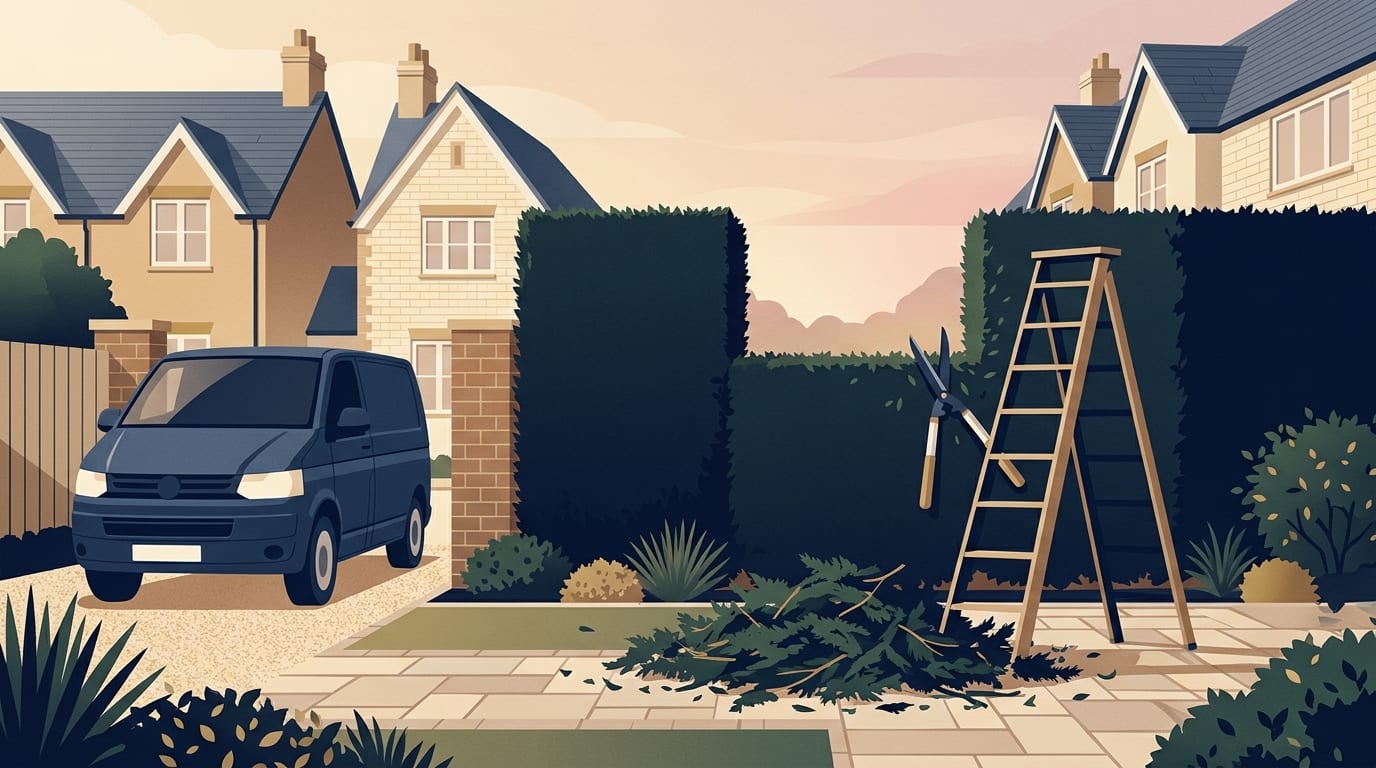
Healthy plants usually tolerate a reduction of up to one third of the height. A reduction of more than a third is possible but not recommended in a single cut. If your hedge has grown far beyond your desired height, the RHS advice is to reduce it in stages rather than all at once.
If you need to make a larger reduction, the Royal Horticultural Society suggests a staged approach. You should start by cutting the height by a third. You then leave the trees to recover and put on new growth. Once the plants have recovered their strength, you can reduce the remainder by up to half. This takes patience and means the job will span more than one growing season.
Why leylandii will not regrow from bare wood
You can trim and shape the hedge as required, as long as cuts are confined to young green shoots. Old wood will not resprout.
If you cut past the green shoots and expose old wood, new growth will not appear from the bare wood. Because you cannot cut into the old wood, an overgrown leylandii hedge cannot simply be narrowed to reclaim space in your garden.
When and how often to cut leylandii
The best time to prune is between April and the end of August. You can make up to three cuts during the growing season to keep the hedge in shape. Keeping cuts within young green shoots avoids cutting into old wood.
If you are planning routine maintenance for your boundaries, you can read our guide on when to cut hedges and what hedge cutting costs. A regular schedule helps you keep the hedge under control.
Rules for protected trees and conservation areas
Before you remove a tall hedge or reduce its height significantly, you must check if the trees are protected. A Tree Preservation Order makes it an offence to cut down, lop, uproot or damage a protected tree without the council's consent.
If your property is in a conservation area, different rules apply. Work on trees in a conservation area normally needs six weeks' notice to the council. Always check with your council before you hire someone to start cutting.
Nesting birds and cutting a leylandii hedge
You must consider local wildlife before you start up a hedge trimmer. Under the Wildlife and Countryside Act 1981, it is unlawful to intentionally take, damage or destroy a wild bird's nest while it is being used or built. You could get an unlimited fine and up to 6 months in prison for each offence if found guilty.
The Royal Horticultural Society states that work should not be carried out between March and August where birds are nesting. A professional landscaper or tree surgeon should always check the hedge carefully for active nests before they begin cutting. If they find a nest in use or being built, they may have to wait. For more details on the law, you can check the GOV.UK wild birds guidance.
The high hedge rules if a neighbour complains
If your hedge is causing a problem for a neighbour, they have legal options. The law regarding high hedges comes from Part 8 of the Anti-Social Behaviour Act 2003. GOV.UK describes a high hedge as a line of two or more trees or shrubs, mostly evergreen or semi-evergreen, that are more than 2 metres tall. The hedge must also act as a barrier to light or access, even if there are gaps in the foliage.
If a neighbour believes your hedge is blocking their light, the council will expect you both to try negotiating first. A council can reject a formal complaint if you have not taken all reasonable steps to settle the dispute without involving them. If the council does investigate, they set and charge fees for the process. The RHS puts a typical complaint at £400, though fees vary by council and reduced fees may be available for those on low incomes or benefits. You can read the official GOV.UK high hedges guide for a summary of the process.
The law cannot require a hedge to be removed entirely. However, if the council upholds the complaint, they can issue a notice. A council may require cutting in stages, for example over three years, and the notice can be appealed. Check with your local council to understand exactly how the rules apply in your nation. If you are on the other side of the fence, you can read our guide on what you can do about a neighbour's high hedge.
When removing and replacing is the better choice
The Royal Horticultural Society suggests that for large hedges, removal and replacement gives a better garden and environment in the long run. If you have inherited a massive leylandii hedge that takes up too much of your garden, taking it out may be worth considering.
Because you cannot reduce the width of a leylandii hedge without leaving bare brown patches, a hedge that has grown too wide cannot simply be cut back to a neat size. The RHS suggests replacing the hedge with fences where long-term hedge care and size restriction are not possible. Removing the trees completely allows you to start fresh and reclaim the lost space.
Rules for replacing the hedge with a fence or paving
When you remove a wide leylandii hedge, you often reclaim a large strip of land along your boundary. If you plan to hire someone to transform the area, it helps to understand the trade terms they will use. Hard landscaping is the built part of a garden, which includes patios, paths, walls, steps, decking, fencing and drainage. Soft landscaping is the living part, covering the soil, turf, planting and trees. A garden designer produces the plan for the space, a landscaper or landscape contractor builds it, and a gardener maintains it.
If you decide to replace the hedge with a fence, in England fences and walls can be up to 1 metre high next to a road or its footpath and 2 metres elsewhere, per the Planning Portal. These permitted development rights apply to houses, not flats or maisonettes. Listed buildings need consent for significant work.
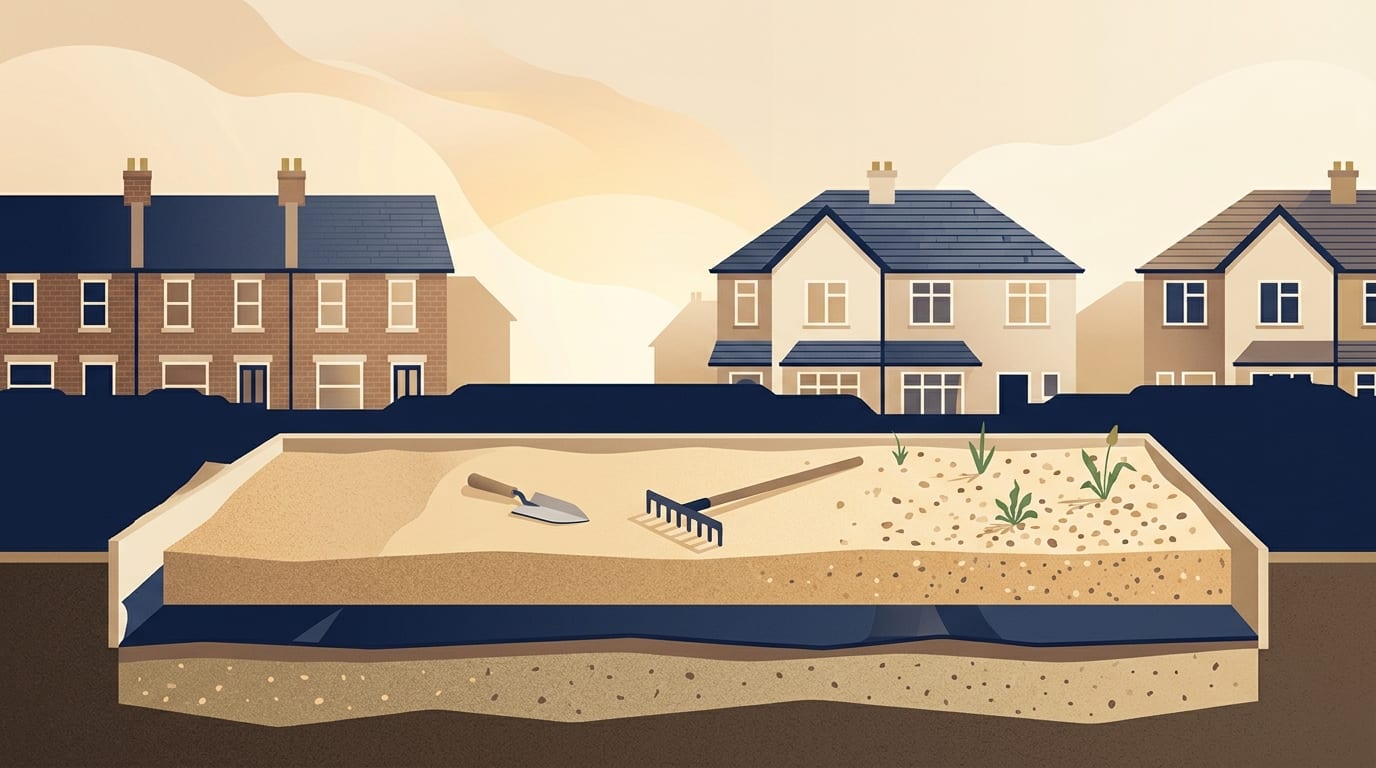
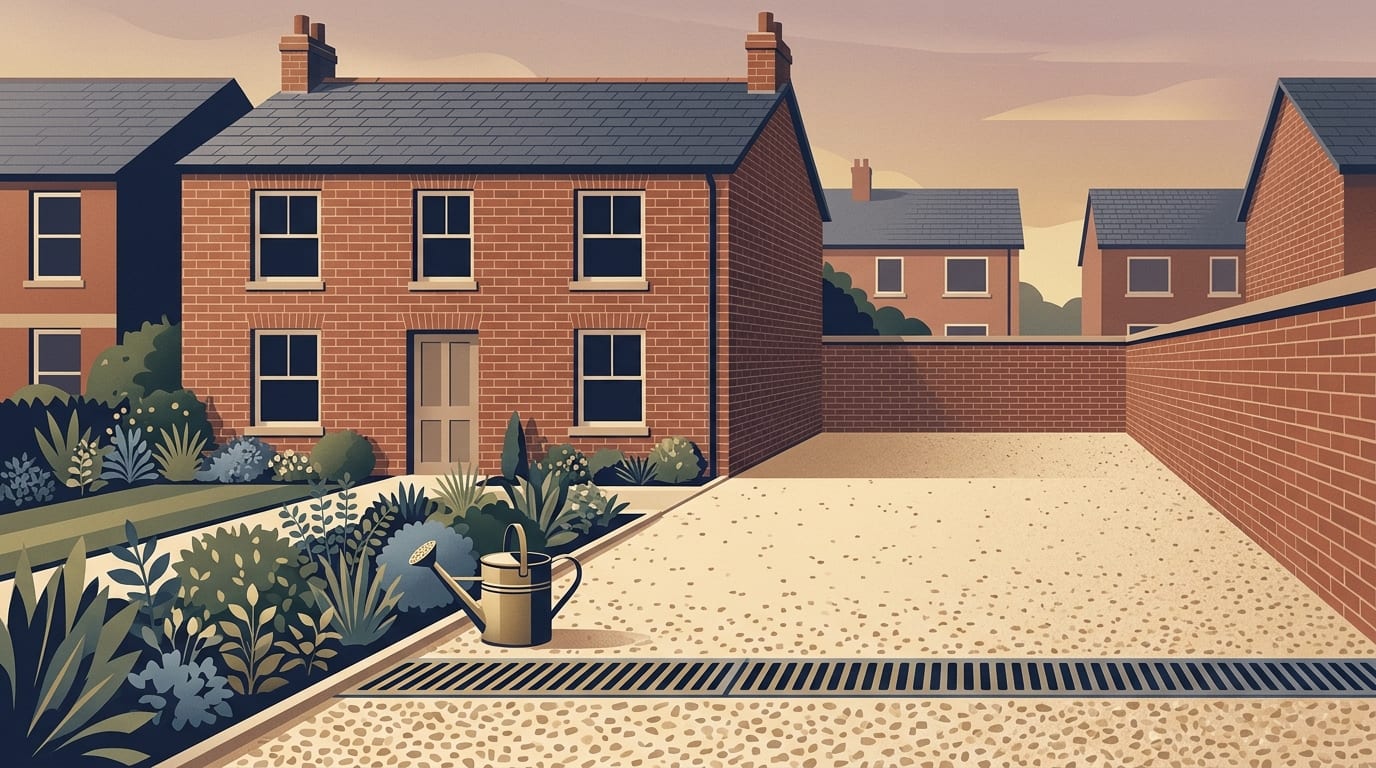
If you want to use the reclaimed space for a patio, a good landscaper will excavate the soil and lay a sub-base. This is compacted crushed stone, often called MOT Type 1, which goes under paving and artificial grass to stop it sinking. The finished paving must have falls, which is the slight slope that sheds water away from the surface so it does not pool. In England, paving more than 5 square metres of a front garden with an impermeable surface that does not drain to a permeable area needs planning permission. Permeable surfacing does not.
If you prefer a raised timber area, you can choose between softwood, hardwood and composite boards, which all sit on a structural frame beneath them. In England, decking is permitted development if it is no more than 30cm above the ground and, with extensions and outbuildings, covers no more than 50 per cent of the garden. Always check with your council if you are unsure about the planning rules for your specific property.
What removing a leylandii hedge costs
Landscapers price per project after a site visit, rather than giving a standard day rate. The main cost drivers are the area, the groundwork required, the levels of the site, waste removal, drainage and the materials you choose. Access is also a major factor, as everything carried through the house costs more in time and labour.
Removing a large conifer hedge generates waste, which is why waste disposal should appear in the quote. A trader who carries waste must be a registered waste carrier, and the register is public. A good quote will state that waste disposal and root removal are included in the price. Leaving stumps in the ground may mean regrowth for some plants, so ask what the quote says about stumps. No stump grinding price is available for hedges.
The table below shows typical costs for removing a hedge and disposing of the waste.
|
Service |
Typical price range |
|---|---|
|
Hedge removal |
£150 to £400 |
|
Large leylandii hedge removal |
£300 to £400 |
|
Garden waste removal |
£15 to £400 |
|
Skip hire |
£60 to £800+ |
|
Mini skip hire |
£60 to £130 |
These are typical 2026 prices. The job takes approximately one to two days. Local quotes will differ based on the exact size of your hedge, the access to your garden and your location. Prices in London and the South East are generally higher. Always check your quotes to see whether VAT is included.
Finding a landscaper and what goes wrong
Landscaping is not a licensed trade, so vetted membership and evidence of past work matter greatly. The British Association of Landscape Industries (BALI) says its Accredited members are vetted on workmanship, skill and health and safety. The Association of Professional Landscapers (APL) says members are assessed, regularly inspected and TrustMark accredited. TrustMark is the government-endorsed quality scheme. If you are hiring a designer, the Society of Garden and Landscape Designers (SGLD) is the professional body for designers. Membership of these organisations is a good sign, though it is not a guarantee.
Under the Consumer Rights Act 2015, work must be done with reasonable care and skill. If it is not, the customer can ask for it to be put right or seek a partial or full refund. Citizens Advice suggests getting three written quotes, having a written contract, paying deposits of no more than 25 per cent and paying by card. They also note that you might be able to cancel within 14 days of agreeing a contract. Remember that a quote is a fixed price, while an estimate is just a rough guess.
Be wary of doorstep callers offering cheap paving or leftover materials to replace your hedge. You should also avoid cash deals with no written specification. The groundwork nobody sees is where corners get cut by cowboy pavers. Signs of poor workmanship include:
- A thin or missing sub-base under the new patio or artificial grass
- Patio slabs laid on dabs of mortar instead of a full bed
- No fall on the paving so water pools or runs towards the house
- Artificial grass laid straight onto the topsoil
A professional landscaper will provide a detailed written specification. A good quote should state:
- The exact excavation depth for the new surface
- The depth of the sub-base
- The named materials being used
- The drainage plans
- That waste removal is included
Common questions
How fast does a leylandii hedge grow?
Leylandii is a fast-growing, dense conifer that puts on height and width very quickly. A newly planted hedge will typically reach maturity in 10 to 20 years. If left unchecked, the trees can eventually reach heights in excess of 30 metres.
Will a leylandii hedge grow back if cut to the trunk?
No, leylandii will not regrow from bare wood. You can trim the green shoots on the outside, but if you cut back into the brown branches or the trunk, no new growth will appear. The RHS says old wood will not resprout.
Can the council force me to remove a leylandii hedge?
The law cannot require a hedge to be removed entirely. If a neighbour complains under the high hedge rules and the council upholds the complaint, they can issue a notice, which may require the hedge to be cut back in stages. They may require this cutting to be done in stages.
Do you need planning permission to remove a leylandii hedge?
Check with your council before removing a large hedge. A Tree Preservation Order makes it an offence to cut down, lop, uproot or damage a protected tree without the council's consent, and work on trees in a conservation area normally needs six weeks' notice to the council.
Next steps before you hire someone
If you have decided to tackle an overgrown leylandii hedge, follow these steps before you agree to any work:
- Check if your property is in a conservation area or if the trees have a Tree Preservation Order
- Look closely for active bird nests if you are planning work between March and August
- Decide whether you want to reduce the height in stages or remove the hedge completely
- Ask landscapers for a fixed written quote rather than an estimate
- Check that the quote includes full waste disposal and root removal
- Verify that the trader is a registered waste carrier
- Ask to see evidence of their past work and check for vetted memberships like BALI or APL
Removing a massive conifer hedge will completely change the look and feel of your outdoor space. If you are ready to reclaim your garden and want to explore your options for fences, paving or turf, you can find a landscaper near you to discuss the project.
Find a top rated landscaper near you
4,373 landscapers across the UK, each ranked on their Google rating and the number of reviews behind it. Start with your county: