
How Much Does a Resin Driveway Cost Compared With Tarmac?
TopRatedLandscapers.co.uk · 6 October 2026
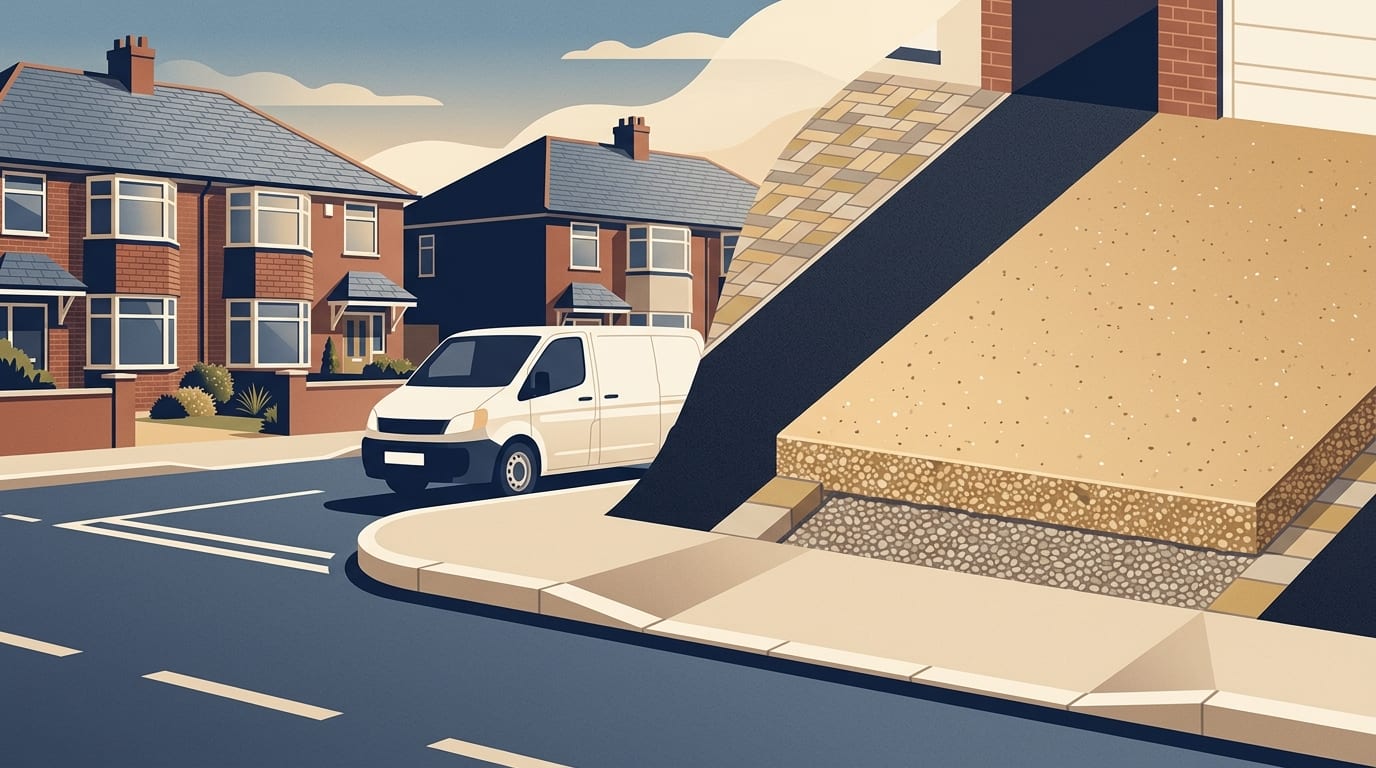
A resin driveway typically costs about £60 to £140 per square metre installed in 2026, meaning most average driveways will run to several thousand pounds. A tarmac driveway is usually cheaper per square metre but requires more frequent maintenance over its lifespan. The total price you pay will depend heavily on whether your existing driveway can be used as a base or if it needs to be dug out and rebuilt.
Typical resin driveway prices
Resin driveways are priced by the square metre and the final bill is split between materials and labour. The materials typically cost £40 to £65 per square metre, while the labour adds £15 to £30 per square metre for a standard installation. A typical installation team charges £300 to £500 per day to lay the surface.
For a small 30 square metre driveway, you can expect total costs of £1,800 to £3,000. A medium 60 square metre driveway usually costs between £3,500 and £5,500. If you have a large 90 square metre driveway, the total price will generally run from £5,000 to £8,000.
Extra costs apply if the existing surface is cracked, crumbling or unstable, or if an old drive has to be dug out and a new sub-base laid. You should always ask your installer to confirm whether VAT is included in their quoted prices.
Resin bound and resin bonded explained
Resin driveways fall into two distinct categories and it is important to know which one you are buying. Resin bonded is the cheaper system where a layer of resin is spread over the base and loose aggregate stones are scattered on top. This leaves a textured finish that looks like loose gravel but without the stones moving around.
While resin bonded costs less upfront, it needs more maintenance because the stones are only attached at the bottom and can work loose over time. Resin bound costs more and involves mixing the stones and resin together before trowelling the mixture smooth. This gives a flat, smooth and low maintenance finish where every stone is fully encapsulated in clear resin.
Some 2026 price lists put resin bound at £85 to £140 per square metre installed, the top of the overall range. It is described as fully permeable when laid on a proper Type 3 sub-base. A permeable surface allows rainwater to drain straight through into the ground below.
Resin, tarmac, block paving and gravel compared
This table shows how the most common driveway materials compare on price per square metre and expected lifespan.
|
Driveway material |
Price per square metre |
Expected lifespan |
|---|---|---|
|
Gravel |
£40 to £70 |
Needs ongoing maintenance |
|
Tarmac |
£45 to £80 |
12 to 18 years |
|
Block paving |
£70 to £170 |
25 to 40 years |
|
Resin |
£60 to £140 |
18 to 25 years |
These figures are typical published prices for 2026 and your local quotes will differ based on the groundwork required.
Tarmac costs less upfront but requires more maintenance over time. A typical 40 square metre tarmac driveway costs about £1,800 to £3,200 and takes one to two days to lay. Tarmac needs re-sealing at eight to ten years, which costs an additional £300 to £500.
Block paving is a traditional choice that costs about £3,200 to £6,800 for a 40 square metre area. It takes four to seven days to lay and lasts up to 40 years, but it requires re-sanding and sealing every five to seven years. Block paving is permeable only if you buy specific permeable versions and use suitable joint material.
Resin bound costs about £3,400 to £5,600 for a 40 square metre area and takes two to three days to lay. It lasts 18 to 25 years and needs less maintenance than block paving or tarmac. Concrete is another durable option, typically costing £85 to £135 per square metre installed, while gravel is the cheapest choice but requires regular raking and topping up.
What drives the cost up
The total area of your driveway is the biggest factor in the price, but the groundwork nobody sees is where costs can quickly escalate. Extra costs apply if an existing surface is cracked, crumbling or unstable and needs to be dug out. Removing an old tarmac or concrete driveway or clearing a heavy gravel drive adds significant labour and waste disposal fees.
Drainage requirements will also increase your final bill. If your driveway needs a soakaway to handle rainwater safely, this typically costs £660 to £1,200 or more. The type of edging you choose to keep the resin contained will also affect the price, with decorative brick or stone borders costing more than simple metal trims.
Access to your garden plays a major part in the labour costs. If materials and machinery have to be carried through a house or down a narrow side alley, the job will take longer and cost more. Prices are also generally higher if you live in London and the South East.
Why the base matters
The base decides how long any driveway lasts and this is the most critical part of the installation. A sub-base is the layer of compacted crushed stone under a driveway, often MOT Type 1, which provides a stable foundation.
You can only overlay an existing surface with resin if it is completely sound. Some installers say resin can be laid on existing concrete once the concrete is sealed and any cracks are repaired. If the old surface is loose, crumbling or prone to movement, it must be dug out completely so a new sub-base can be laid.
If the base fails or shifts, the resin on top can crack. Resin bound is described as fully permeable when it is laid on a proper Type 3 sub-base, which lets water pass through, so ask which sub-base your installer is quoting for. You might find it helpful to read about how much garden landscaping costs to understand how groundwork is priced across different projects.
What goes wrong with driveway installations
Driveway construction attracts rogue traders and it is important to know the warning signs. You should always avoid doorstep callers offering cheap paving or claiming they have leftover materials from a job down the road. You should also avoid cash deals with no written specification, as these leave you with little proof of what was agreed if something goes wrong.
The groundwork nobody sees is where corners get cut by bad tradespeople. A poor installation might have a thin or missing sub-base, which can cause the surface to sink and crack under the weight of a car.
Drainage is another area where bad installations fail. A driveway must have a fall, which is the slight slope that sheds water away from buildings. If there is no fall, water can pool on the surface or run towards the house.
Do you need planning permission?
The rules below are for England, from the Planning Portal. If you live elsewhere in the UK, or you are unsure, check with your council. In England, you will not need planning permission if a new or replacement driveway of any size uses permeable or porous surfacing which lets water drain through. This includes materials such as gravel, permeable concrete block paving or porous asphalt.
You also do not need planning permission if rainwater is directed to a lawn or border to drain naturally within your property boundary. Resin bound surfaces are permeable when laid on a suitable permeable sub-base, so you should ask your installer exactly what base they are using and where the water will go.
If the area is more than five square metres, planning permission is needed for traditional impermeable driveways that do not let water run to a permeable area. These allowances apply to houses, not flats and maisonettes, and not where a planning condition or article 4 direction limits permitted development rights. Listed buildings need consent for significant work. You can read the full official rules on the Planning Portal.
Getting a dropped kerb
A dropped kerb is required if you wish to drive over a pavement onto your property. It is illegal to drive over a pavement without one.
You have to make a dropped kerb application to your local authority before you start using the driveway.
You should never assume that a dropped kerb application will be approved automatically. It is always best to secure your council approval for the kerb before you pay a deposit for the driveway installation.
How long installation takes
The time it takes to lay a resin driveway depends on the size of the area and the weather conditions. A small 30 square metre driveway takes about two days to install. A medium 60 square metre driveway takes two to three days, while a large 90 square metre driveway takes three to five days.
These timeframes assume the base is already prepared. If your landscaper needs to dig out an old concrete driveway and lay a new sub-base, the project will take longer.
Once the resin is laid, it needs time to cure and harden. Typical guidance is to allow four to six hours before walking on the surface and 24 hours before driving on it, but ask your installer for the times that apply to their system and the weather on the day.
Looking after a resin driveway
When installed correctly on a solid base, a resin driveway has an expected lifespan of about 18 to 25 years. A properly installed resin bound surface is porous, so rainwater should drain through rather than sit in puddles.
You will need to budget for some basic upkeep to keep the surface looking fresh and to stop weeds taking hold on the surface dirt. Professional jet washing costs £80 to £200 a year and will lift away tyre marks and grime.
You should also treat the surface for algae and moss, which costs £10 to £15 and should be done once or twice a year. This stops the surface becoming slippery and protects the resin from damage.
What a driveway quote should include
Landscaping is not a licensed trade, so vetted membership and evidence of past work matter. The British Association of Landscape Industries (BALI) says its Accredited members are vetted on workmanship, skill and health and safety. The Association of Professional Landscapers (APL) says members are assessed, regularly inspected and TrustMark accredited. TrustMark is the government-endorsed quality scheme. Membership of these bodies is a good sign, not a guarantee.
A quote is a fixed price, while an estimate is a rough guess that can end up higher. Citizens Advice suggests getting written quotes from at least three different traders. You should ask for two to three recent references and check their insurance documents. You should also agree a written contract covering the work, timings, clean-up, materials and payment terms.
Under the Consumer Rights Act 2015, work must be done with reasonable care and skill. If it is not, the customer can ask for it to be put right or seek a partial or full refund. You might also be able to cancel within 14 days of telling the trader to go ahead or signing a written contract.
A trader who carries waste must be a registered waste carrier, and you can check them on the public register of waste carriers online. A business can get an unlimited fine if it transports waste without being registered.
A good written quote for a resin driveway should clearly state:
- The total area to be covered in square metres
- The exact excavation depth and how waste will be removed
- The sub-base type and its compacted depth
- Whether the finished surface will be fully permeable
- How drainage and water runoff will be handled
- The specific edging materials to be used
- Whether the system is resin bound or resin bonded
- The name of the aggregate blend and details of any guarantee
Common questions
What are some driveway ideas for a tight budget?
Gravel is the cheapest driveway material at £40 to £70 per square metre, but it needs regular upkeep. Tarmac is the next most affordable option at £45 to £80 per square metre, although it needs re-sealing at eight to ten years. If you are weighing up the cheaper options, you can read more about whether gravel is a good choice for your garden.
What is the cost of a tarmac driveway?
A tarmac driveway typically costs £45 to £80 per square metre installed. For a standard 40 square metre driveway, you should expect to pay about £1,800 to £3,200 in total. It is a very cost-effective surface and takes just one to two days to lay.
How long does a tarmac driveway last compared with resin?
Tarmac has an expected lifespan of 12 to 18 years and requires re-sealing after eight to ten years to stop it drying out and cracking. A resin driveway lasts longer, with an expected lifespan of 18 to 25 years when laid correctly. Resin bound surfaces also require less intensive maintenance over their lifetime.
Do I need a soakaway for a new driveway?
You may need a soakaway if rainwater from the driveway has nowhere to drain naturally within your property, so ask your installer whether one is needed and why. A soakaway captures the water and lets it seep slowly into the ground. If your landscaper says you need one, expect it to cost £660 to £1,200 or more.
Next steps
Before you invite a landscaper or driveway contractor to your home for a site visit, you should make sure you are fully prepared. Having a clear idea of what you want will help you get accurate and comparable quotes.
- Check the permeable surfacing rules to see if your front garden project needs planning permission
- Apply for a dropped kerb from your local council if you do not already have legal access across the pavement
- Decide whether you want the smooth finish of resin bound or the textured look of resin bonded
- Ask every trader what sub-base they plan to use and where the rainwater will go
- Keep any deposit to 25 per cent at most and never pay everything upfront
- Pay by card rather than cash for better consumer protection
- Check the public register to ensure your chosen trader is a registered waste carrier
Once you know the size of your driveway and the type of finish you want, you can find a landscaper near you to arrange a site visit and request a detailed written quote.
Related Guides
How Much Does a Retaining Wall Cost and Which Type Is Best?
Typical UK retaining wall prices for sleepers, block, brick, stone and gabions, when you need an engineer, why drainage matters and what a quote should include.
How Much Does a Gardener Cost for Regular Garden Maintenance?
Typical UK gardener rates per hour, per visit and per year, what regular garden maintenance covers, what costs extra and how to check a gardener first.
How Much Does a Block Paving Driveway Cost?
Typical UK block paving driveway prices per square metre and by drive size, what goes underneath, permeable paving and the front garden rules, and what to ask.