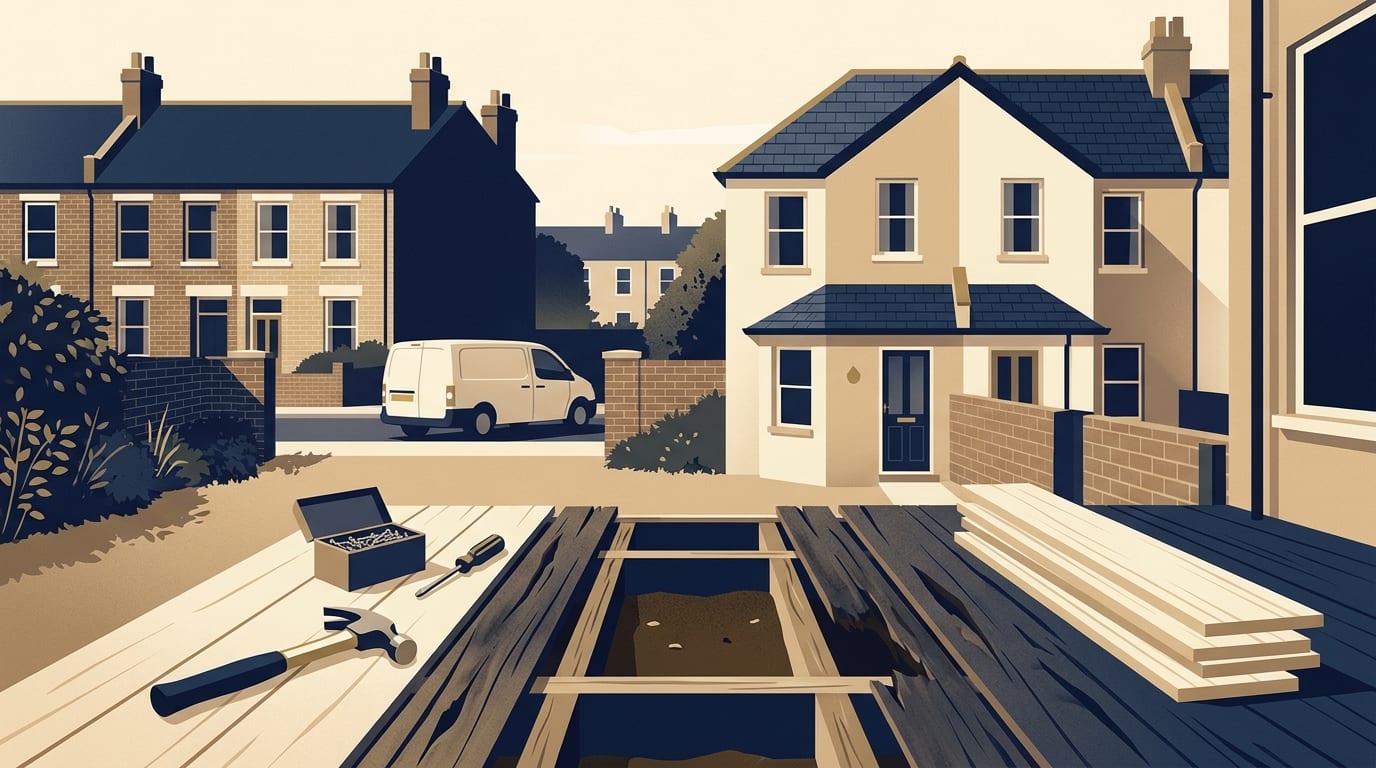
The best time to landscape a garden depends on the exact work you have planned. Hard landscaping such as patios and fencing can be done in most months of the year. Planting is best done from autumn to early spring. Many landscapers are easier to book in autumn and winter than they are during the spring rush.
Hard landscaping through the year
Hard landscaping is the built part of a garden. This includes patios, paths, walls, steps, decking, fencing and drainage. You can schedule this construction work at almost any time of year. One view is that early autumn, around September, suits hardscape work.
Before laying paving or artificial grass, a landscaper will put down a sub-base. A sub-base is compacted crushed stone, often called MOT Type 1, that provides a solid foundation. Groundworks like this can happen in winter, but heavy winter rain and frost can slow the digging down. Frozen ground is harder to excavate and heavy rain makes site preparation difficult.
Patios and paths need to be built with a slight slope so that rainwater drains away. This slope is known as a fall. You also need to choose between permeable and impermeable surfaces. Permeable surfaces let water drain through them into the ground below. Impermeable surfaces block water, meaning the fall must direct the runoff to a drain or a permeable area.
If you are planning a decking project, you will need to choose your materials. A landscaper builds a structural frame beneath the deck first. The visible surface can be made from softwood, hardwood or composite boards. Each board type has different costs and upkeep, so ask for the named materials in your quote.
Planting and the October to April window
Soft landscaping is the living part of a garden. This includes soil preparation, laying turf, planting and adding trees. Planting is best done between October and April. This is also the period when bare-root plants are available, in winter or early spring.
You should always avoid planting in waterlogged soil. You must also wait if you have frozen soil that is too hard to dig. If the ground is frozen or waterlogged, wait.
Different types of plants have different rules for when they can go into the ground. Container-grown plants can be planted at any time of year. However, they are easier to care for if planted in autumn or winter because they need less watering than in spring or summer. Bare-root plants are only available in winter or early spring while they are dormant, and you should plant them immediately.
Newly planted trees and shrubs are commonly stressed by drought. The typical amount of water they need is 30 to 50 litres per square metre each week in dry weather. This equals four to six standard watering cans per square metre. Be careful, too, because overwatering can cause problems in poorly draining soil.
Why autumn and spring work well
Views differ on the ideal timing. One view is that autumn and spring are ideal because the ground is workable and planting establishes well. Another view is that spring and early summer, April to June, suit planting establishment, with early autumn (September) for hardscape work only. This differs from the RHS planting window above, so there is no single best month, and it makes sense to match the timing to the job and to your landscaper's availability.
Landscapers are often easier to book in autumn than they are in the summer. Some landscapers are sometimes more flexible on price in autumn and winter. Getting your quotes sorted early can help you secure a slot for the main build.
Summer builds and dry spells
Demand for landscapers peaks in spring and summer. This peak demand can mean longer lead times before a contractor can start your project. No typical booking lead time is available, so ask each landscaper for their start date.
If you manage to book a summer build, you need to prepare for the heat. Summer dry spells put new planting under stress. For newly planted trees and shrubs, the typical amount is 30 to 50 litres per square metre each week in dry weather.
A major landscaping job will turn your garden into a building site for a while, whatever the season, so think about when you want to use the space.
Winter work, frost and wet ground
Winter is generally a quieter time for the landscaping industry. Some landscapers may offer more competitive rates during these months to fill their diaries. You may find it easier to get a landscaper to start in winter.
However, winter weather brings its own challenges. Ground frost can delay turf laying and groundworks. If a landscaper cannot dig the frozen soil to lay a sub-base, the entire project timeline will slip.
Heavy winter rain can also slow groundworks and delay planting. If your garden is prone to holding water, a winter build might take longer and create more mess than an autumn or spring project.
Booking early and the spring rush
Because demand peaks in spring and summer, it helps to start planning early. Landscapers price each job per project after a site visit.
The main cost drivers for any garden project are the total area, the groundwork required and the changes in ground levels. Access is another major factor, because everything carried through the house costs more in time and labour. Waste removal, drainage solutions and the specific materials you choose will also dictate the final price. Prices in London and the South East are higher than in other parts of the country.
The groundwork nobody sees is where corners get cut by bad tradespeople. A good quote states the exact excavation depth, the sub-base depth, named materials, drainage plans and waste removal details. You should also check whether VAT is included in the final figure. Design fees are usually separate from the main build cost, and larger jobs are paid in stages as the work progresses.
Planning a phased project
You do not have to complete your entire garden in one go. Planning a phased project allows you to spread the cost and work with the seasons. One approach is to start the design and get your quotes in winter.
You can then schedule the hard landscaping for early in the year. Once the patios, walls and fences are built, you can move on to the soft landscaping. Leaving the planting for the autumn window fits the October to April period that the RHS gives for planting.
It helps to know exactly who you need to hire for each phase. A garden designer produces the plan for your new space. A landscaper or landscape contractor builds the design, and a gardener maintains it once it is finished. The professional body for designers is the Society of Garden and Landscape Designers, which was formerly known as the Society of Garden Designers.
Rules for garden walls, paving and decking
Landscaping involves several planning rules that you must follow. If you are ever unsure about planning rules, you should check with your local council. The main rules for garden projects in England include:
- Decking is classed as permitted development if it is no more than 30cm above the ground.
- Decking and other extensions must cover no more than 50 per cent of the garden space.
- Fences and walls can be up to 1 metre high next to a road or its footpath.
- Fences and walls can be up to 2 metres high elsewhere.
- Paving more than 5 square metres of a front garden with an impermeable surface that does not drain to a permeable area needs planning permission.
These permitted development rights apply to houses, not flats or maisonettes. Permeable surfacing on a front garden does not need planning permission. If you live in a listed building, you will need consent for any significant work.
Trees are protected by strict laws. A Tree Preservation Order makes it an offence to cut down, lop, uproot or damage a protected tree without the council's consent. Work on trees in a conservation area normally needs six weeks of notice given to the council.
What goes wrong and how to avoid it
Garden projects can go wrong when homeowners hire the wrong people. Poor groundworks can ruin a patio, and drainage failures can cause problems. You should watch out for these common problems:
- Doorstep callers offering cheap paving or leftover materials from another job.
- Cash deals with no written specification to prove what was agreed.
- A thin or missing sub-base that causes the paving to sink and crack.
- Slabs laid on dabs of mortar instead of a full bed, creating weak spots.
- Patios with no fall, meaning water pools on the surface or runs towards the house.
- Artificial grass laid straight onto soil.
Questions to ask your landscaper
Landscaping is not a licensed trade, so anyone can call themselves a landscaper. Vetted membership and evidence of past work matter a lot. The British Association of Landscape Industries says its Accredited members are vetted on workmanship, skill and health and safety. The Association of Professional Landscapers says its members are assessed, regularly inspected and TrustMark accredited.
TrustMark is the government-endorsed quality scheme for tradespeople. Membership of these bodies is a good sign, but it is not a guarantee of perfect work. A trader who carries waste from your property must be a registered waste carrier, and this register is public so you can check their credentials.
Under the Consumer Rights Act 2015, work must be done with reasonable care and skill. If it is not, the customer can ask for it to be put right or seek a partial or full refund. Citizens Advice suggests getting three written quotes before you choose a firm. A quote is a fixed price, while an estimate is just a rough guess.
Citizens Advice also suggests getting a written contract, paying deposits of no more than 25 per cent and paying by card for extra protection. You might be able to cancel within 14 days of agreeing a contract, and you should contact Citizens Advice if you have a dispute over the work.
Common questions
How long does a garden project take to complete?
The timeline depends on the size of your garden and the complexity of the design, from a few days for a single job to several weeks for a full design and build. Read more about typical timelines in the guide on how long landscaping takes.
When is the best time to lay new grass?
Ground frost can delay turf laying and groundworks, so avoid laying new grass when the ground is frozen. For a detailed breakdown of the seasons, read the guide on the best time to lay turf.
Do I need a designer or a landscaper?
If you want a completely new layout with complex planting schemes, you should hire a garden designer first. If you already know exactly what you want and just need a patio or fence built, you can go straight to a landscaper. Larger projects often require both professionals working together.
How do I check if my landscaper is legitimate?
Because landscaping is not licensed, you must ask to see their previous work and speak to past customers. You should also check if they are a registered waste carrier and look for vetted memberships like the Association of Professional Landscapers. Always insist on a detailed written quote rather than a verbal estimate.
Next steps for your garden project
Before you start contacting local firms, you need to get your plans in order. Follow these steps to prepare for your garden project:
- Decide exactly what you want to change in your garden before you ask for quotes.
- Check if your plans for decking, paving or walls will require planning permission from your local council.
- Look at your garden to see if access is difficult, as carrying materials through the house will increase the cost.
- Decide if you want to phase the work by building the hard landscaping first and planting in the autumn.
- Gather three written quotes that clearly state the excavation depth, sub-base depth and waste removal plans.
- Check the public register to ensure your chosen landscaper is a registered waste carrier.
- Ask the landscaper if their final quoted price includes VAT.
Planning your garden project carefully ensures you get the right materials in the ground at the right time of year. When you have a clear idea of what you want to build and plant, you can find a landscaper near you to bring your ideas to life.
Find a top rated landscaper near you
4,373 landscapers across the UK, each ranked on their Google rating and the number of reviews behind it. Start with your county: