
Is Composite Decking Better Than Timber?
TopRatedLandscapers.co.uk · 30 September 2026
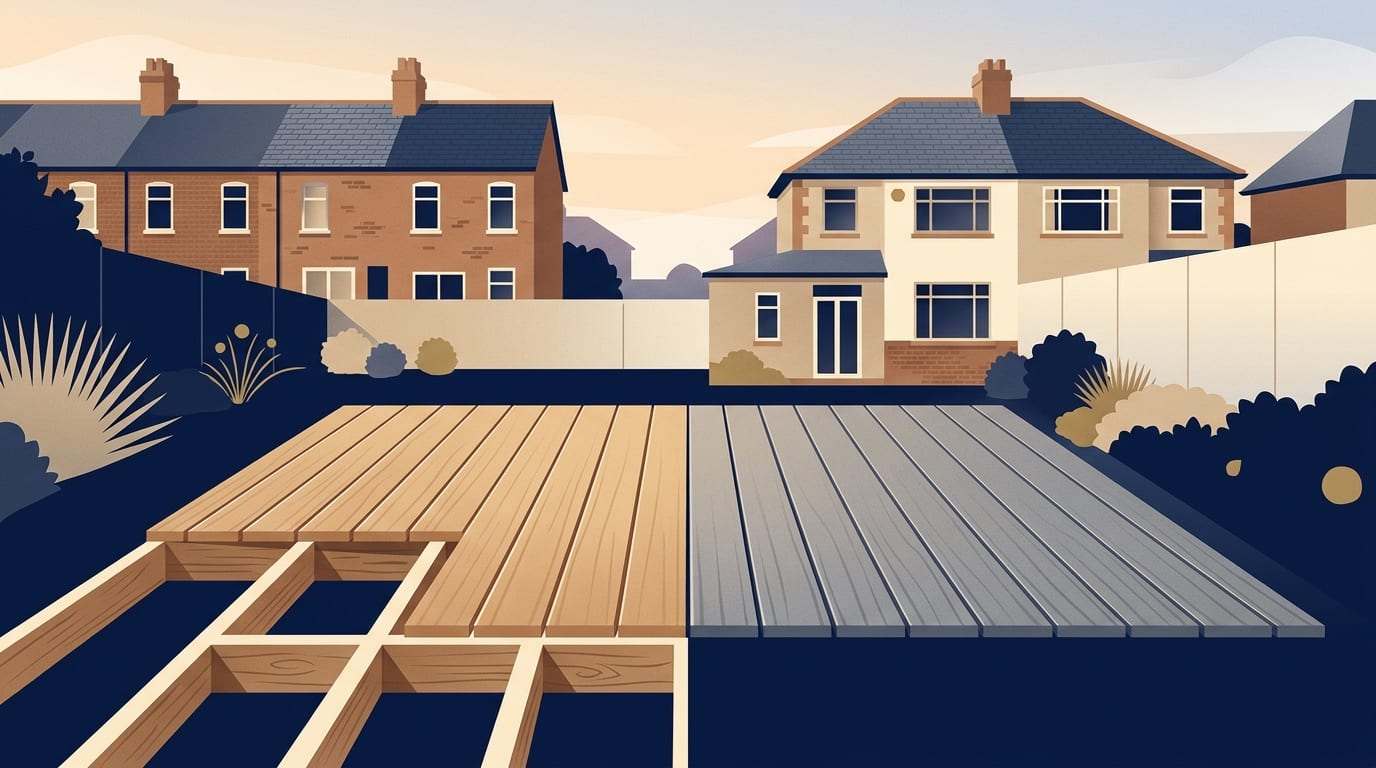
Composite decking is the better choice if you want a surface that lasts up to 30 years with minimal upkeep, while timber is usually the better option for a lower upfront cost. The right material for your garden depends entirely on your budget and how much time you want to spend maintaining the boards. A timber deck requires regular treatment to stop it rotting, while a composite deck needs little more than an occasional wash. The structure hidden underneath the boards will ultimately decide how long either option lasts.
|
Feature |
Timber |
Composite |
|---|---|---|
|
Typical price |
£40 to £110 per square metre for softwood. Hardwood costs significantly more |
Boards about £35 to £80 per square metre. A 15 square metre deck is £975 to £1,650 installed |
|
Lifespan |
10 to 20 years, or 25 years or more for high quality treated timber with good upkeep |
Published figures range from 15 to 25 years up to 25 to 30 years |
|
Upkeep |
Regular sealing, staining and repairs |
Occasional cleaning |
|
Appearance |
Natural grain that weathers to silver grey if left untreated |
Uniform colour and texture |
|
Grip when wet |
Slippery if moss and lichen build up |
Slippery if moss and lichen build up |
|
Heat underfoot |
Warm in direct sun |
Can get hot in direct sun, especially dark colours |
|
Repair |
Boards can be sanded and re-treated |
Damaged boards are usually replaced |
Prices and lifespans are typical published figures for 2026. Guides vary, so treat them as broad ranges.
What composite decking is
Composite decking is manufactured by mixing wood fibres with plastic. This creates a board that looks similar to wood but is less likely to rot or suffer mould and mildew.
The manufacturing process means the boards are uniform in size and colour, and they are less prone to splintering than natural timber. You have several options to choose from when buying composite materials.
- Hollow boards are lighter and have channels running through their core, which makes them cheaper to buy.
- Solid boards are heavier and stronger, and they cost more.
- Capped boards have a protective polymer shell moulded around the outside to resist stains and fading.
- Uncapped boards lack this outer shell, making them cheaper but slightly more vulnerable to weather damage over time.
The following table shows typical published prices for 2026.
|
Composite board type |
Material price per square metre |
|---|---|
|
Hollow uncapped |
About £35 |
|
Hollow capped |
About £55 |
|
Solid uncapped |
About £60 |
|
Solid capped |
About £80 |
These figures show typical published prices for the stated year, and local quotes will differ.
Timber decking options
Timber decking is made from natural wood and remains a traditional choice for many garden projects. Softwood decking is the most common and affordable option, usually made from fast-growing pine or spruce that has been pressure treated with preservatives. Softwood is easy for a landscaper to cut and install, which helps to keep the labour costs down during the build.
Hardwood decking is made from slower-growing broadleaf trees such as oak or teak. Hardwood is much more durable than softwood and naturally resists rot, but it is significantly more expensive to buy. It is also harder to work with, meaning the installation takes longer and costs more in labour.
Any timber deck requires regular maintenance to protect it from the British weather. The wood will naturally weather to a silver grey colour if left untreated, and it can absorb moisture if the protective layers wear away.
Cost compared
Landscapers price decking projects after a site visit to check the ground levels and access. Everything carried through the house takes longer and costs more. The main cost drivers are the area you want to cover, the groundwork required, waste removal and the materials you choose. Installers usually charge a day rate of £200 to £250.
Typical published prices for 2026 put softwood timber decking at £40 to £110 per square metre. Published figures vary, and decking in general is priced at £100 to £125 per square metre installed, taking two to four days to complete. A typical decking installation project costs £3,000 to £6,500. Prices are higher in London, where a typical project costs £4,000 to £7,500. You can read more about typical garden landscaping costs to understand how different projects are priced.
Composite decking costs vary widely depending on the size of the area and the specific board type you choose. A typical composite decking job takes one to three days to install. The following table shows typical published prices for 2026.
|
Deck size |
Typical installed cost |
|---|---|
|
15 square metres |
£975 to £1,650 |
|
25 square metres |
£1,650 to £2,750 |
|
40 square metres |
£2,600 to £4,400 |
These figures show typical published prices for the stated year, and local quotes will differ. You should always check whether VAT is included in any price you are given.
Lifespan and maintenance compared
Wood decking tends to last between 10 and 20 years. High quality treated timber can last 25 years or more, but only with good upkeep. Published lifespans for composite decking range from 15 to 25 years up to an average of 25 to 30 years, because it is less likely to rot or suffer mould and mildew.
Softwood needs regular sealing, staining and repairs to keep it protected from the rain. This usually involves waiting for a dry spell, cleaning the boards thoroughly, and applying a liquid treatment to stop water soaking into the wood. If you skip this work, the timber will eventually soften and rot.
Composite decking needs only occasional cleaning to keep it looking new. You should clean it periodically with soapy water and a soft brush to remove moss and lichen. Avoid harsh chemicals, which can damage the surface of the boards.
Looks, grip and comfort underfoot
Timber offers a natural, traditional finish that blends easily into most gardens. Composite boards provide a more uniform, modern appearance, although premium solid boards often feature a realistic wood grain texture pressed into the surface.
Moss and lichen will grow on any outdoor surface and can make a deck incredibly slippery when wet. Neither material is entirely slip-resistant if you let dirt build up, so keeping the boards clean is the best way to maintain grip throughout the winter.
Composite boards can get hot underfoot in direct summer sun, and dark colours absorb the most heat. If the deck sits in a sun trap, a lighter colour is the more comfortable choice.
If a timber board is scratched or stained, you can often sand it down and re-treat the surface. Capped composite boards should not be sanded because this can damage the protective outer layer. A badly damaged composite board usually has to be removed and replaced.
Why the frame matters as much as the boards
A deck is only as strong as the frame beneath it. The joists and posts support the entire structure. You should inspect posts and joists regularly because they are the critical structural parts of the installation.
The groundwork nobody sees is where corners get cut. A professional landscaper will prepare the ground properly before building the frame. This usually means clearing turf and vegetation, laying a weed membrane, and supporting the frame on posts set in concrete or on firm, level pads so that no timber sits directly on wet soil.
The deck should be built with a slight slope, known as a fall. The fall sheds water away from the house so that it does not pool on the boards or run into your brickwork. Good ventilation under the frame is also essential to let air circulate and dry out any dampness.
If you put 30-year composite boards on a cheap softwood frame that rots in ten years, the whole deck will need to be rebuilt. You should ask your installer what materials they plan to use for the subframe and exactly how it will be supported and ventilated.
Planning rules for decking
Decking has strict planning rules in England, particularly if you want to build a raised platform. Decking is permitted development if it is no more than 30cm above the ground. Together with other extensions and outbuildings, it must cover no more than 50 per cent of the garden area.
None of the decking can be forward of the principal elevation of your home. No decking is permitted development within the curtilage of a listed building, so speak to your council before planning a deck there. These permitted development rights apply to houses, not flats or maisonettes.
You can read the full official guidance on the Planning Portal. If you live elsewhere in the UK, or if you are unsure about your rights, you should check with your local council before starting work.
You must also check for protected trees before digging foundations for a deck frame. A Tree Preservation Order makes it an offence to cut down, lop, uproot or damage a protected tree without the council's consent. Work on trees in a conservation area normally needs six weeks' notice to the council.
What a decking quote should include
A quote is a fixed price for the work, whereas an estimate is just a rough guess. You should ask for a written specification that details exactly what the landscaper will provide. A good quote leaves no room for confusion over materials or groundwork.
A comprehensive decking quote should state the following clearly.
- The exact type of boards being used, including whether composite is hollow or solid and capped or uncapped.
- The material being used for the subframe and how it will be supported.
- How the ground will be prepared and what the posts or supports will sit on.
- The provision of a fall to ensure water drains away correctly.
- The removal of all waste from the site.
A trader who carries waste must be a registered waste carrier, and the register is public. Landscaping is not a licensed trade, so vetted membership and evidence of past work matter. The British Association of Landscape Industries (BALI) says its Accredited members are vetted on workmanship, skill and health and safety. The Association of Professional Landscapers (APL) says members are assessed, regularly inspected and TrustMark accredited. TrustMark is the government-endorsed quality scheme. You can read more about vetted tradespeople in our guide on how to choose a landscape gardener.
Under the Consumer Rights Act 2015, work must be done with reasonable care and skill. If the work does not meet this standard, the customer can ask for it to be put right or seek a partial or full refund. Citizens Advice suggests getting three written quotes, having a written contract, paying deposits of no more than 25 per cent, and paying by card. They also note that you might be able to cancel within 14 days of agreeing a contract.
Common questions
What is the best decking to avoid mould and rot?
Composite decking is less likely to rot or suffer mould and mildew than natural timber. It is manufactured from wood fibres and plastic, which makes the boards more resistant to moisture. Timber requires regular sealing and staining to achieve a similar level of protection.
How do you build non-slip decking?
No outdoor surface is entirely slip-resistant, as moss and lichen will grow over time and create a slippery layer. The best way to maintain grip is to clean the decking periodically with soapy water and a soft brush. A proper fall built into the frame will also stop water pooling and freezing into ice.
Is plastic decking the same as composite?
Composite decking is a blend of plastic and wood fibres, designed to offer the strength of wood with the water resistance of plastic. Pure plastic decking does exist, but it is a different product that contains no wood content at all.
What are some garden decking ideas for small spaces?
Keeping the deck low to the ground is the simplest approach, as decking no more than 30cm above the ground is usually permitted development for houses in England. You should ensure the deck and any other outbuildings cover no more than 50 per cent of the total garden area. Using lighter coloured composite boards can also help a small, shaded space feel brighter.
Which one suits you
Choosing the right decking comes down to balancing your initial budget against the time you want to spend on upkeep. Timber offers a classic look for a lower upfront cost, while composite requires a larger investment for decades of minimal maintenance.
You should take the following steps before hiring a professional.
- Decide whether you want to spend time sealing and staining wood every year.
- Measure the space to check it covers no more than 50 per cent of your garden area alongside other outbuildings.
- Check your garden levels to see if the deck needs to be raised more than 30cm above the ground.
- Ask three different landscapers for a written quote that names the exact materials they will use.
- Confirm how the subframe will be supported and ventilated, and that the deck will have a slight fall for drainage.
Taking the time to check these details gives your new deck the best chance of lasting, whichever material you choose. When you are ready to start gathering quotes, you can find a landscaper near you to discuss your plans and arrange a site visit.
Related Guides

How to Level a Sloping Garden and What It Costs
How a sloping or bumpy garden is levelled, from evening out a lawn to cut and fill and terracing, typical UK costs, steps between levels and the rules to check.
Is an Imprinted Concrete Driveway a Good Choice?
What an imprinted concrete driveway costs in the UK, its pros and cons against block paving and resin, the drainage rules, curing, cracking and resealing.
Which Garden Fence Is Best and What Does It Cost?
Compare panel, closeboard, picket, composite and metal fencing on price and lifespan, plus the height rules and what a fencing quote should cover.